

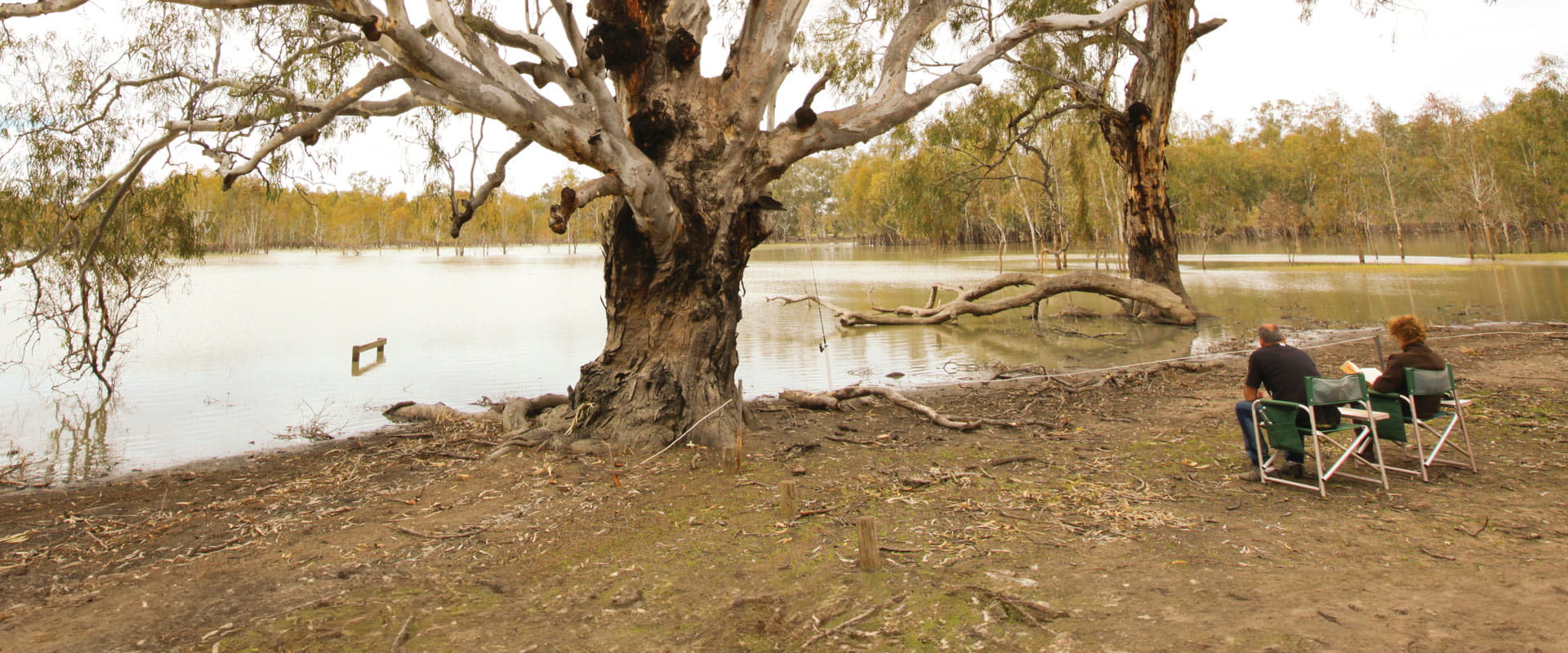
Explore
Camping in Hattah-Kulkyne National Park
Hattah-Kulkyne National Park lies in typical mallee country with extensive low scrub and open native pine woodland. Superbly adapted birds, animals and vegetation thrive in the poor, sandy soils and searing summers.
There are two designated camping areas in the park with basic facilities, including non-flush toilets, fireplaces and picnic tables. They are at Lake Mournpall and Lake Hattah. Advance bookings and payment are required year round for camping at these sites.
Other river camping areas without facilities are available at Ki Bend, Firemans Bend and Jinkers Bend. No booking or fees are required.
Please practise minimal impact camping and observe relevant fire regulations. Beware of falling River Red Gum limbs when camping along the river.
Things to do in the area
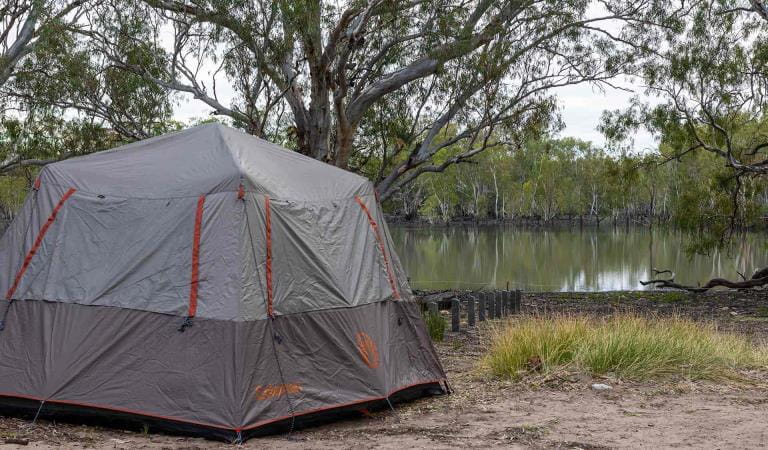
Lake Hattah Camping Area
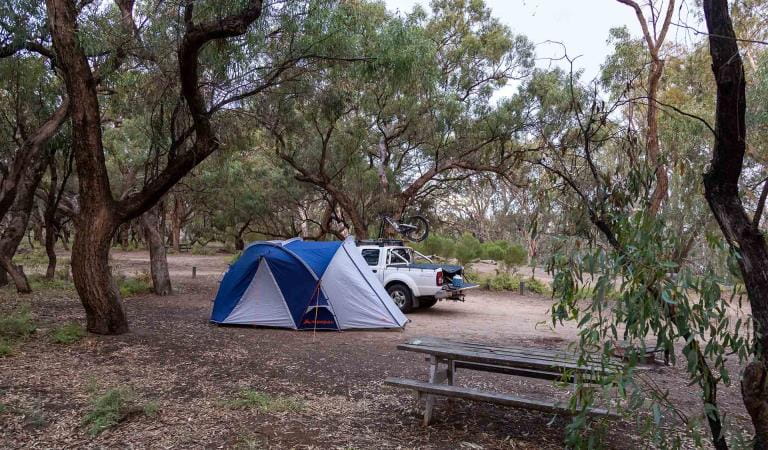
Lake Mournpall Camping Area
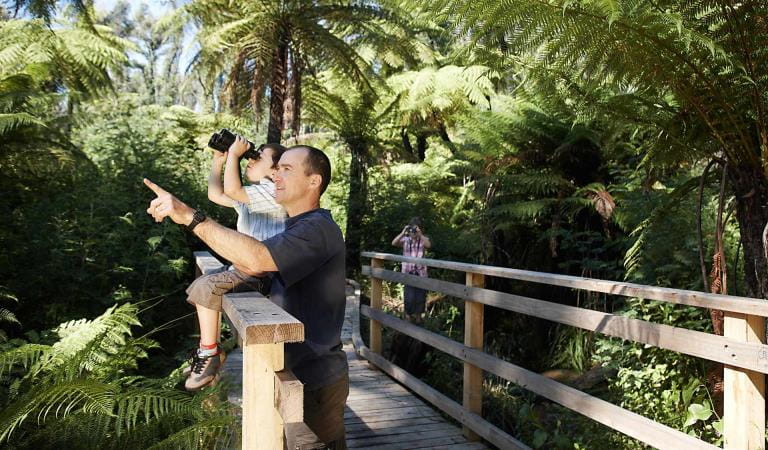
Bird watching

Long drives
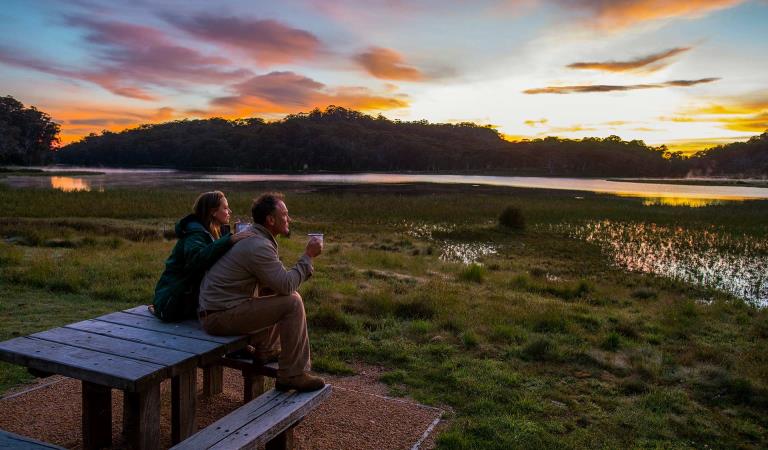
Sunrises and sunsets
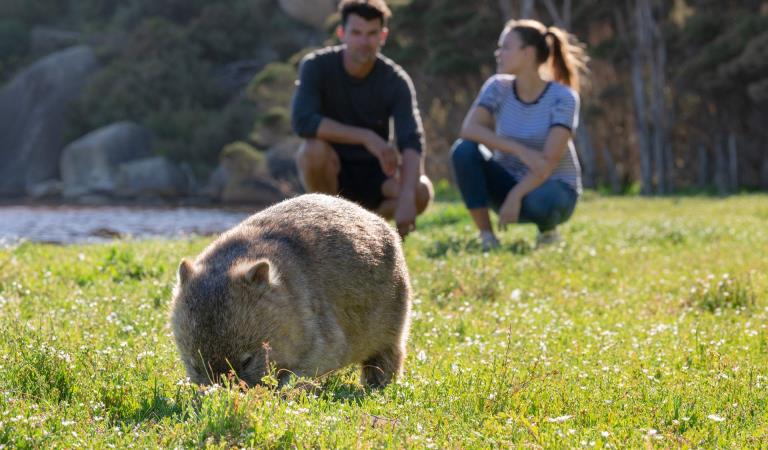
Wildlife viewing
How to get there
Camping in Hattah-Kulkyne National Park
Sites
When you're there
Need to know
Camping in Hattah-Kulkyne National Park
Accessibility
Change of Conditions
Nature being nature, sometimes conditions can change at short notice. It’s a good idea to check this page ahead of your visit for any updates.
-
Notices Affecting Multiple Sites
Changing Access
Raak Track and Goosefoot Track are currently closed due to fire impacts.From Monday 1st June to December 2026, essential environmental works will take place within the northern section of the park as part of the Victorian Murray Floodplain Restoration Project (VMFRP). During this time, visitors can expect increased heavy vehicle movement and temporary track closures. To ensure public safety, certain areas will be restricted during construction. We recommend checking this page frequently for real-time updates before planning your trip.Please refer to the attached map for specific details.Please plan your visit around these closures and comply with local signs.Thank you for your patience.Attachments: Hattah-Kulkyne access changes May-Dec 2026 (841KB)
-
Hattah-Kulkyne National Park
Planned access changes: Hattah-Kulkyne VMFRP project
From 10 June to December 2026, essential environmental works will take place within the Hattah-Kulkyne park as part of the Victorian Murray Floodplain Restoration Project (VMFRP). During this time, visitors can expect increased heavy vehicle movement and temporary track closures.Certain areas will be restricted during construction for public safety. Please refer to the detailed maps of the affected zones on our VMFRP project page. We recommend checking this page frequently for real-time updates before planning your trip to Hattah-Kulkyne.