

Inside the Dargo Complex Fire: a conversation with Mike Dower
Tuesday 17 February, 2026
206 kilometres from Melbourne, tucked into the idyllic countryside at the base of the Southern Alps, is Heyfield – home to what is currently one of the state’s busiest Incident Control Centres (ICC).
“Yeah mate, I’ve got time to talk. Just let me step outside, we’ve been busy today. Lots of people running around,” Mike Dower told me from the other end of the phone.
“We’ve even got some folks from the Canadian Incident Management Team over to help us out. They’ve come from Alberta.”
As the noise in the background moved from clacking keyboards to the rustling of trees, Mike took the time to speak with me about his role and the ongoing efforts to fight the Dargo Complex fire.
On a regular day, Mike is our hard-working Area Chief Ranger for the Gippsland Alps. Locals and visitors might recognise him from his ripper beard and huge grin. But during the recent fires, Mike has taken on the role of Level 3 Operations Officer in the Heyfield Incident Control Centre (ICC).
“I’m a Level 3 Operations Officer, which is the most senior operational and tactical firefighting role,” Mike says.
“It means I’m responsible for all firefighting efforts relating to an incident. You’re not only watching what’s going on and trying to put the fire out, but you’re also working at a cross-functional level in the Incident Management Team.”
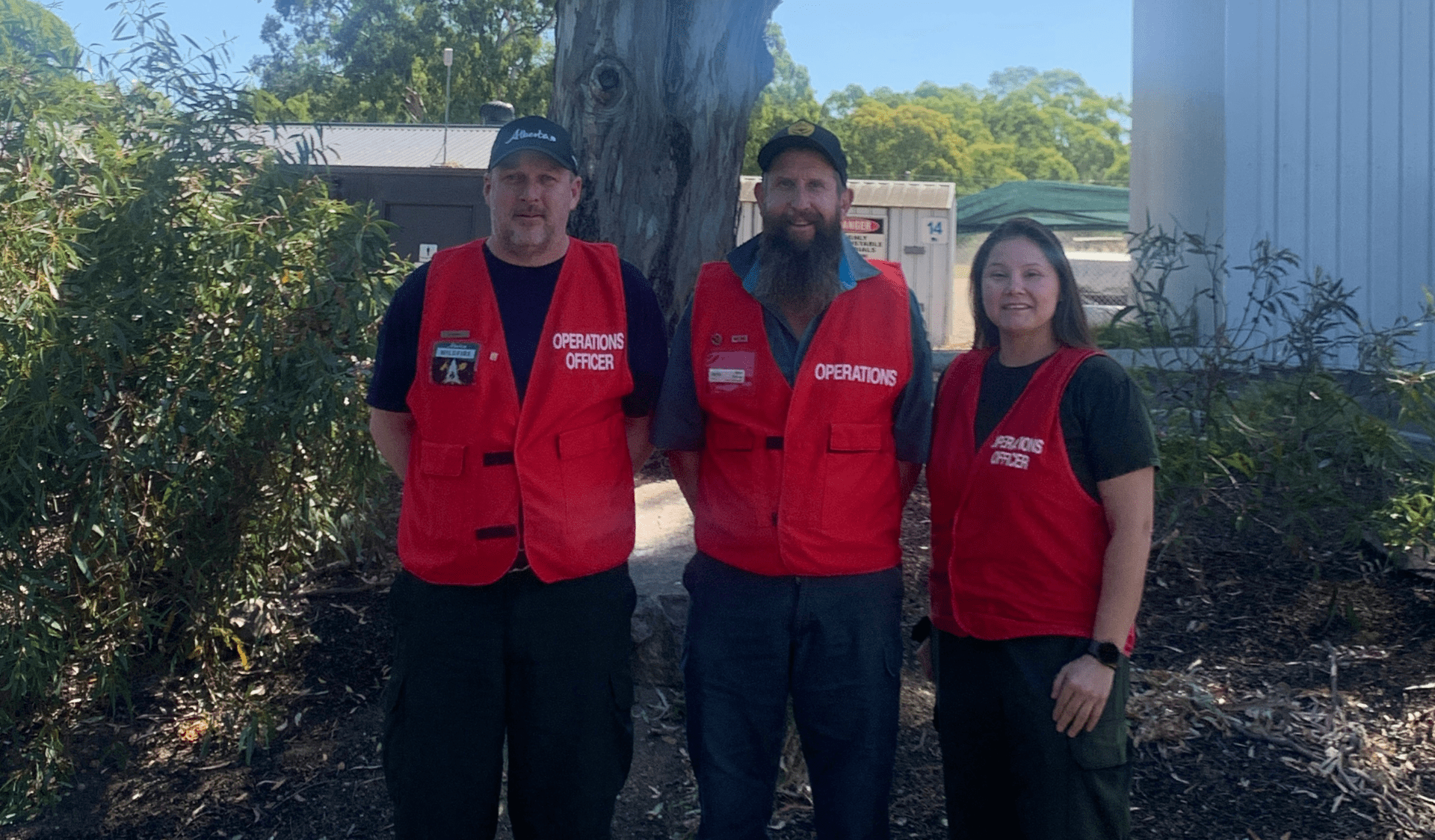
Mike Dower, Level 3 Operations Officer (middle) with Derek Gough (left) and Mel Bulldog (right), Canadian Type 1 Operations Section Chiefs. Credit: Parks Victoria
That means Mike doesn’t just manage the firefighting efforts but is also looking after the safety and welfare of the firefighters and the community.
“The Dargo Complex Fire ran through 60 kilometres of remote mountain landscape in a few hours, and we had to make sure that the safety of our firefighters and community was considered first and foremost. We had to ensure our people were not in the path of such a fast-moving fire.”
Mike says the biggest challenge is how rapidly the fire can spread on a bad fire weather day. It’s a balance to try and keep pace with the spread of the fire while making sure that our crews and community are safe.
“On 9 January – which was the worst day – the fire was spotting 20 kilometres ahead of itself, which in turn was starting new fires. It was jumping ridge to ridge,” Mike explains.
“We were relying heavily on the aircraft intelligence, I was glued to the phone talking to the Air Attack Supervisor who was flying alongside the fire. They were helping me gain a picture of what was happening, in turn I could guide the Incident Controller to where the fire was heading and set the required emergency warnings.
“Every day you must make critical decisions from 6am to 9 or 10pm on the safety of our people, our aircraft operations, our machinery plan operators and community members. You need to provide clear and concise advice to communities – like Dargo – that are in the path of large bushfires. I’m just lucky that we have a good relationship with the communities here, that part makes my job and my team’s jobs easier.”

Smoke from the Dargo Complex Fire, taken by the Air Attack Supervisor

Smoke from the Dargo Complex Fire, taken by the Air Attack Supervisor
I knew that it took a metaphorical (and physical) village to fight a fire, especially one this big. But I don’t think I realised just how many moving parts went into fire response. From the ICC to air support, and on-ground fire fighters, it was amazing to hear how fighting a blaze could be like a game of chess: trying to predict where the other is going to move to force it into a corner.
“I’m proud of the work that the collective team has done to reduce the impact and damage to the community,” Mike tells me.
“There has been a lot of hard work over the course of several weeks to prevent fire from impacting private assets. We did lose one house on 9 January, due to the extreme fire conditions. I’d be lying if I said it wasn’t difficult to talk to the owners about that.
“But I’m proud that we’ve been able to work with community to reduce the impact, although we don’t always win the battle in these cases, it’s about being empathetic and providing support. The team is really good at that.”
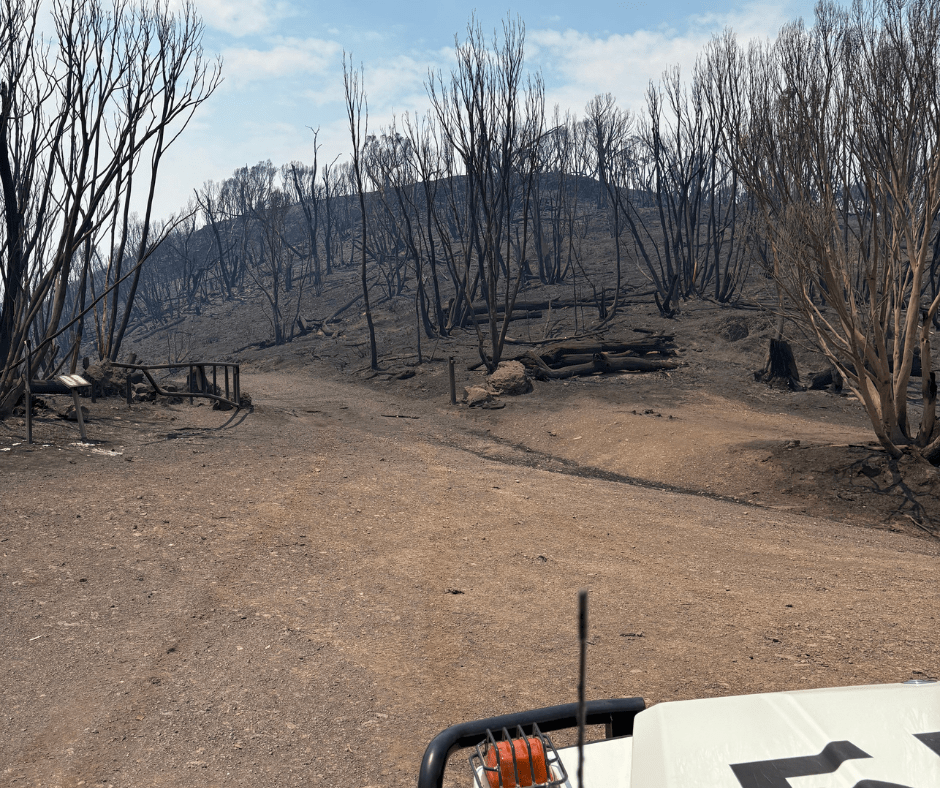
Aftermath of the fire. Credit: Parks Victoria
Mike’s level-headedness and care was evident throughout our phone call, and he left me with some sage advice:
“You always take lessons from large incidents, as a firefighter, you can always learn lots from the most recent incident you manage. I think the big one is that you’ve got to manage the adrenaline and decision making accordingly during difficult times. You always have to re-check yourself on that, in high pressure situations you need to manage to think clearly.
“With every high-pressure situation, you start to get a little better at it.
“Also, you get smashed with a lot of questions in this kind of role, and you need to respect that the questions that you’re getting are from people that are trying to assist and you need to stay patient – it’s a bit of an art.”