

Citizen scientists mark a decade of discovery at Bael Bael Grassland
Wednesday 29 April, 2026
A dedicated team of scientists, rangers and volunteers has marked a major milestone at Bael Bael Grassland Nature Conservation Reserve, completing the tenth annual fauna survey at one of Victoria’s most important - and least understood - ecosystems.
Bael Bael Grassland, located between Kerang and Swan Hill in the state’s north, is the largest continuous area of protected native grassland in Victoria. Once widespread, native grasslands are now listed as an endangered ecological community, with less than two per cent of their original area remaining.
Volunteer citizen scientists from the Field Naturalists Club of Victoria joined Parks Victoria’s Conservation Science and Insights team and local rangers for the milestone survey at Bael Bael and nearby Yassom Swamp in early April.
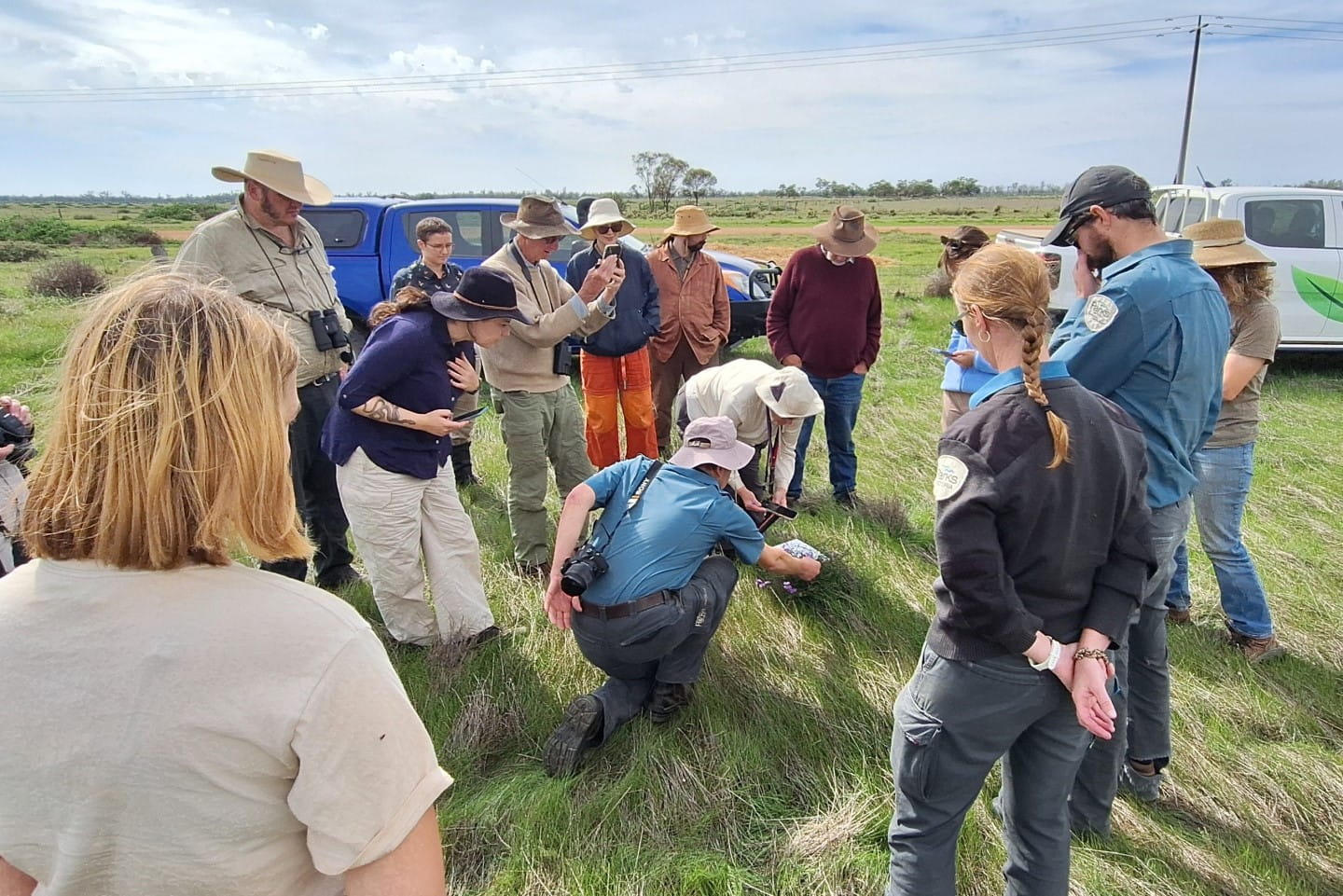
Image: Volunteers from the Field Naturalists Club of Victoria have been helping with the annual surveys at Bael Bael Grassland for 10 years. Photo supplied by Andrej Hohmann.
A greener grassland than expected
Following heavy rainfall at the end of summer, Bael Bael was greener than participants had ever seen it at this time of year.
According to Andrej Hohmann, a volunteer with the Field Naturalists Club of Victoria, “it was a sort of a second spring” with the amount of wildflowers and grasses that were blooming.
“One of the great things about constantly coming back to Bael Bael is we see how it changes. Usually at the end of the summer it’ll be a lot drier, some years it’s been flooded, but this year everything was green with lots of new vegetation having sprung up,” Andrej said.

Field Naturalist volunteers join Parks Victoria staff in the Bael Bael Grassland. Native grasslands like this are under considerable threat. Photo: Mark Antos

A number of dried salt lakes also pepper the Bael Bael Grassland, providing a different type of habitat which increases the biodiversity found there. Photo: Mark Antos

Surveys are also conducted at the Yassom Swamp Nature Conservation Reserve, which borders the Bael Bael Grassland. Photo: Mark Antos

The team also conducts field surveys at night with spotlights, driving the exact same routes each year. Photo: Andrej Hohmann
Critically endagered species recorded in surveys
But while the lush growth had transformed the landscape, it also made wildlife harder to detect, with numbers of many observed species lower than in previous years.
Despite this, the team recorded several significant sightings at the Bael Bael and Yassom Swamp Nature Conservation Reserves.
Most notably, critically endangered Plains-wanderers were detected for the third consecutive year. Five birds were observed, including a father with chicks - an encouraging sign that the species is not only persisting at Bael Bael but successfully breeding.
“They’re the Holy Grail of grassland critters. And to not just find them in the reserve, but evidence of successful breeding there as well means that the work the Parks Victoria team has been doing is paying off,” Andrej said.
Other bird species were also found across the reserves, including Banded Lapwings, Blue Bonnets, White-winged Fairywrens, Stubble Quail and Tree Martins. Some of these species were found to be nesting, the timing of which was unusual, likely triggered by the recent rainfall and burst of vegetation.
There were also increases in sightings of other grassland specialists. Curl Snakes and Fat-tailed Dunnarts were recorded, with the latter reappearing for the first time in two years. An endangered legless lizard, the Hooded Scaly-foot, was also detected for the third year running.


The importance of volunteers and citizen science
The decade of data gathering surveys has built a clearer picture of how this special ecosystem functions.
Together, scientists and volunteers have added around 80 new fauna species to the Bael Bael Grassland list via the surveys, while also tracking long-term trends of the dynamic grasslands.
“We’ve now collected 10 years of data from this reserve, each year following the exact same paths as the year before,” Andrej said.
“It’s given us a great understanding of how the grasslands have changed over time. This data then feeds directly into Parks Victoria staff who can use it to make informed decisions.”
“Knowing that the data we’re collecting is actually being used to inform conservation decisions makes the whole experience so worthwhile.”
Dr Mark Antos, Parks Victoria’s Conservation, Science and Insights Manager, said citizen science helped researchers and land managers understand what is happening in nature.
“Volunteer citizen scientists play an important role in helping Parks Victoria manage the different landscapes and ecosystems across our state. They gather important data which increases our understanding of where attention should be directed." Dr Antos said.
“We’d particularly like to thank the many dedicated citizen science groups, like the Field Naturalists Club, who partner with us regularly to achieve this."
"I’d encourage anyone who has an interest in learning more about the natural world around them to consider joining one of these groups – the data gathered is invaluable, and you'll have a great time doing it.”
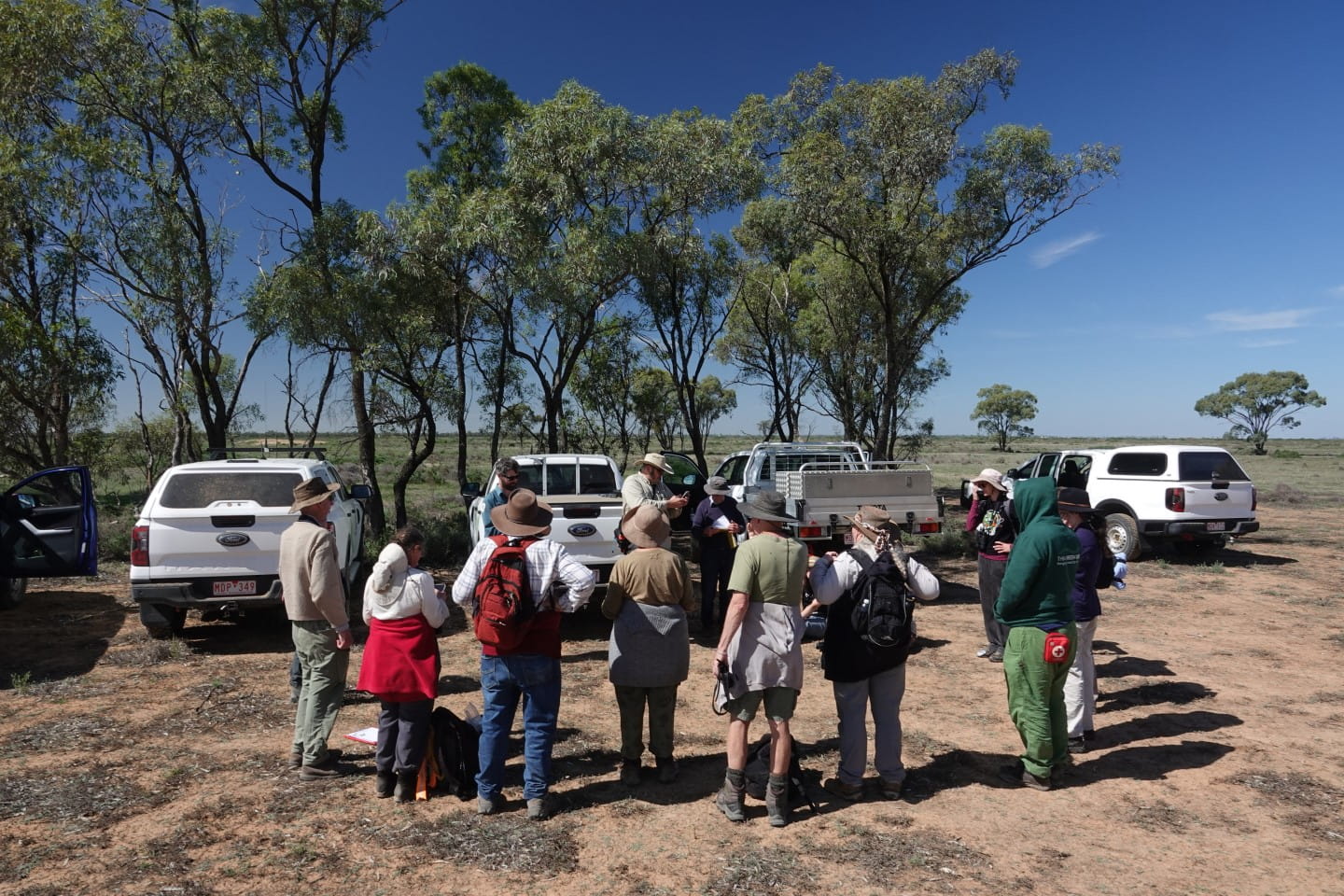
Image: Volunteering with citizen science groups, like the Field Naturalists Club, is great way to learn more about the world around you. Photo: Mark Antos.
As the program now enters its second decade, the value of this work will only continue to grow. At the same time, it demonstrates the powerful contribution citizen scientists and volunteers can make to conservation.
“You don’t need a background in ecology or conservation to join the Field Naturalists, it’s open to everyone, and we’re all about learning together and skilling-up,” Andrej said.
“Some of our members have been involved for 50-60 years, and while they may not have a formal background in ecology, they do have decades of experience thanks to the Field Nats.”
In a landscape where so little native grassland remains, every insight matters.
And thanks to a decade of collaboration between scientists, rangers and volunteers, Bael Bael is continuing to reveal its secrets - one survey at a time.
Sign up for our regular Conservation and Science Newsletter to hear from Parks Victoria Chief Scientist Dr Mark Norman about what discoveries are happening in our parks and reserves, direct to your inbox.
Related news

New signs of hope for threatened species in the Western Grasslands Reserve
Threatened plants and animals are showing encouraging signs of recovery in the open grasslands west of Melbourne, as long-term restoration work across the Western Grasslands Reserve begins to take hold.

Mapping spinifex grass to help a tiny bird
How do we help protect the only bird in Victoria that is naturally found nowhere else – the Mallee-emu wren? By finding out where it lives and other places that might be suitable for it.

Celebrating 10 years of Woowookarung Regional Park
Ten years from its official opening and the creation of a new trail, Parks Victoria is asking community members to have their say on Woowookarung Regional Park's next chapter.