

Reconstructed Dee Slip Bridge open for visitors once again
Thursday 14 May, 2026
In the misty foothills of Mount Donna Buang, where towering mountain ash trees pierce the clouds, the historic Dee Slip Bridge has reopened following extensive repair works.
The elegant timber trestle bridge, a cherished landmark along the renowned O'Shannassy Aqueduct Trail in Yarra Ranges National Park, reopened last month after being closed since 2021.
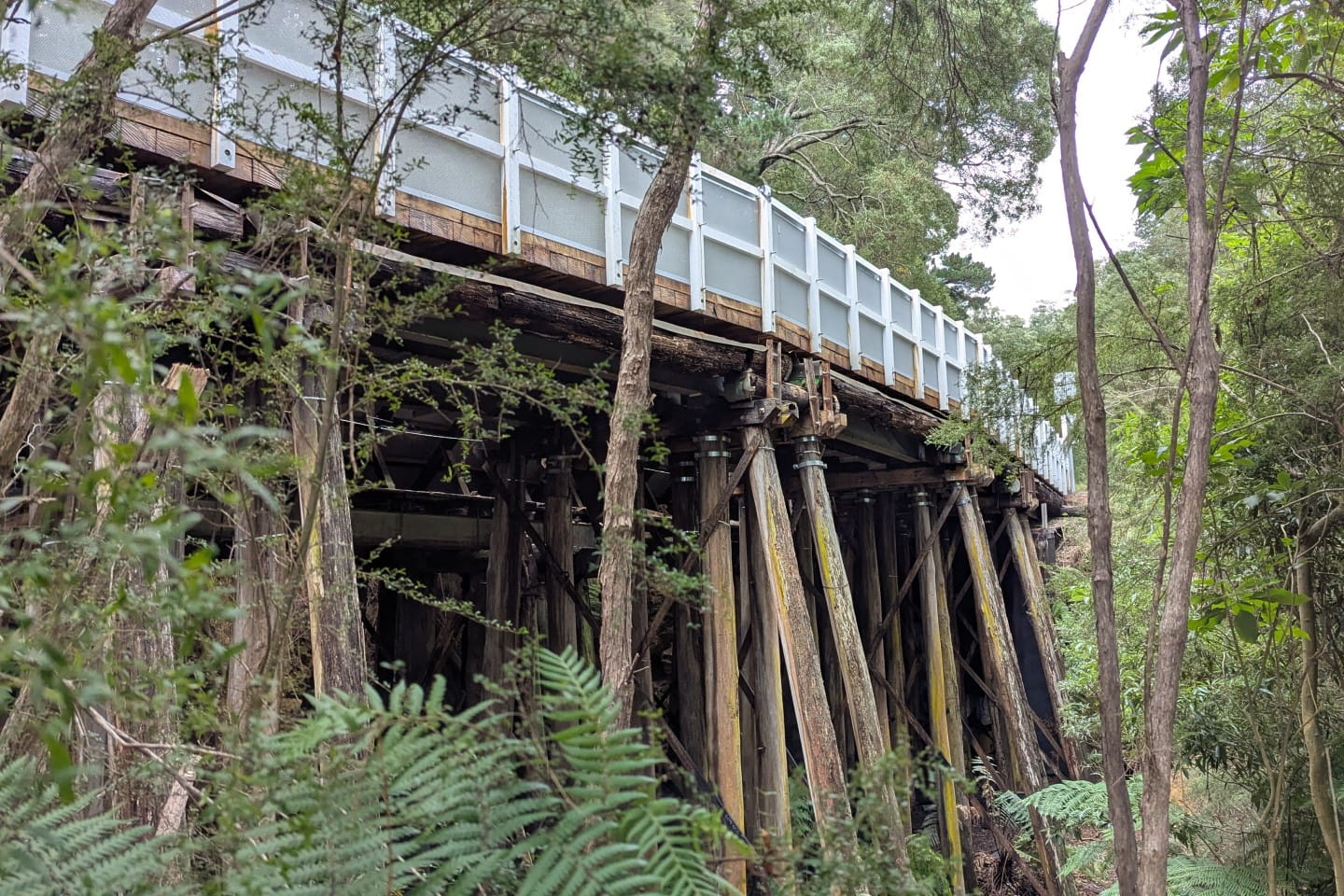
Photo: The reconstructed Dee Slip trestle bridge has been able to retain a lot of it's original aesthetic.
First constructed in 1947, the Dee Slip Bridge was built after a section of the aqueduct collapsed following a landslip and the force of the water flow gouged out a large 'slip’ in the side of the embankment.
For many years the bridge was used to access both the aqueduct and the walking trail, but as the years wore on its timbers began to suffer the ravages of time and weather. In 2021 the bridge was further damaged when a large pine tree collapsed onto it.
For walkers, cyclists, and nature lovers, the closure created a frustrating detour that broke the trail’s seamless 30-kilometre magic.

O'Shannassy Aqueduct Trail
The 30km trail follows the open-channel aqueduct, passing dense fern gullies and creeks with stunning views of the valley below.

Cycle beneath towering trees
It's easy to see why the O'Shannassy Aqueduct Trail is so popular, with scenery like this right along the relatively flat trail. Road cyclists wanting more of a challenge might like to to try riding to the top of nearby Mount Donna Buang.
Parks Victoria recognised the bridge’s importance - both as a vital link and as a piece of living history. The bridge is the only timber trestle bridge on the system and it supports the maintenance track and the aqueduct.
Extensive repair works began in November 2025, with considerable effort made to ensure as much of the existing timber as possible could be kept.
While some of the original 1947 piles needed to be removed as they had rotted, in many places the original timber has been retained, with modern steel supports being integrated into the trestle design for long-term durability.
Dr Kim Wilson, Parks Victoria’s Non-Aboriginal Cultural Heritage Programs Senior Advisor, said the team had likened the substantial amount of timber in the bridge’s substructure to a "forest of piles".
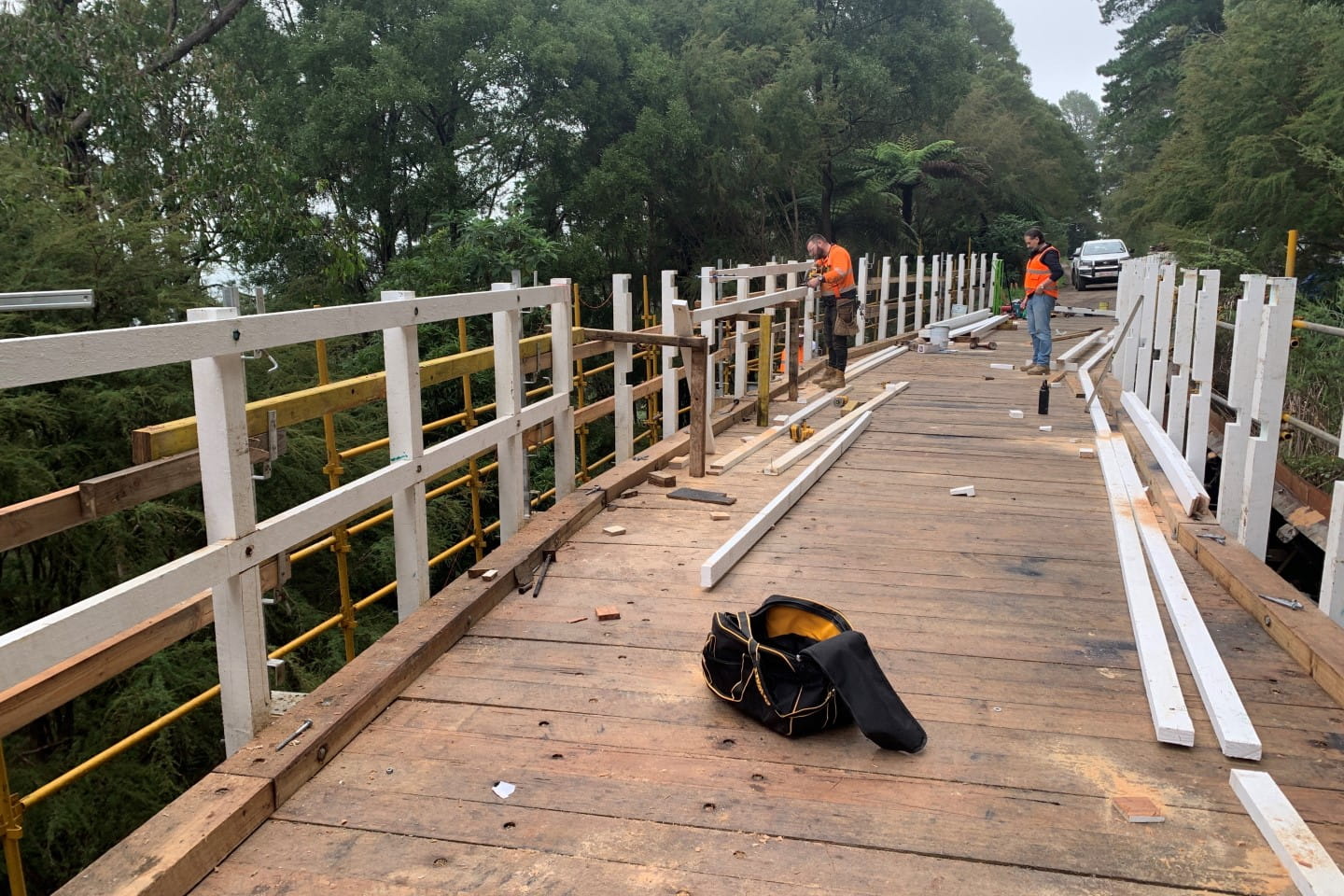 Photo: The exisiting timbers were retained where possible, with steel beams used to strengthen the bridge.
“One of the unique aspects about the Dee Slip Bridge is the way timber supports have been continuously added over time – although some of the piles became structurally redundant, they were kept in situ alongside the new structural piles, as they were added,” Kim said.
“We have been able to retain a lot of the original timber in the repaired bridge.
“New horizontal steel beams have been carefully inserted for structural support, but in a visually recessive way so that it still looks like a predominantly timber bridge.
“We’ve retained the timber aesthetic of the bridge which is an important part of its heritage value, and ensured it is structurally sound and will be around for decades of future use.”
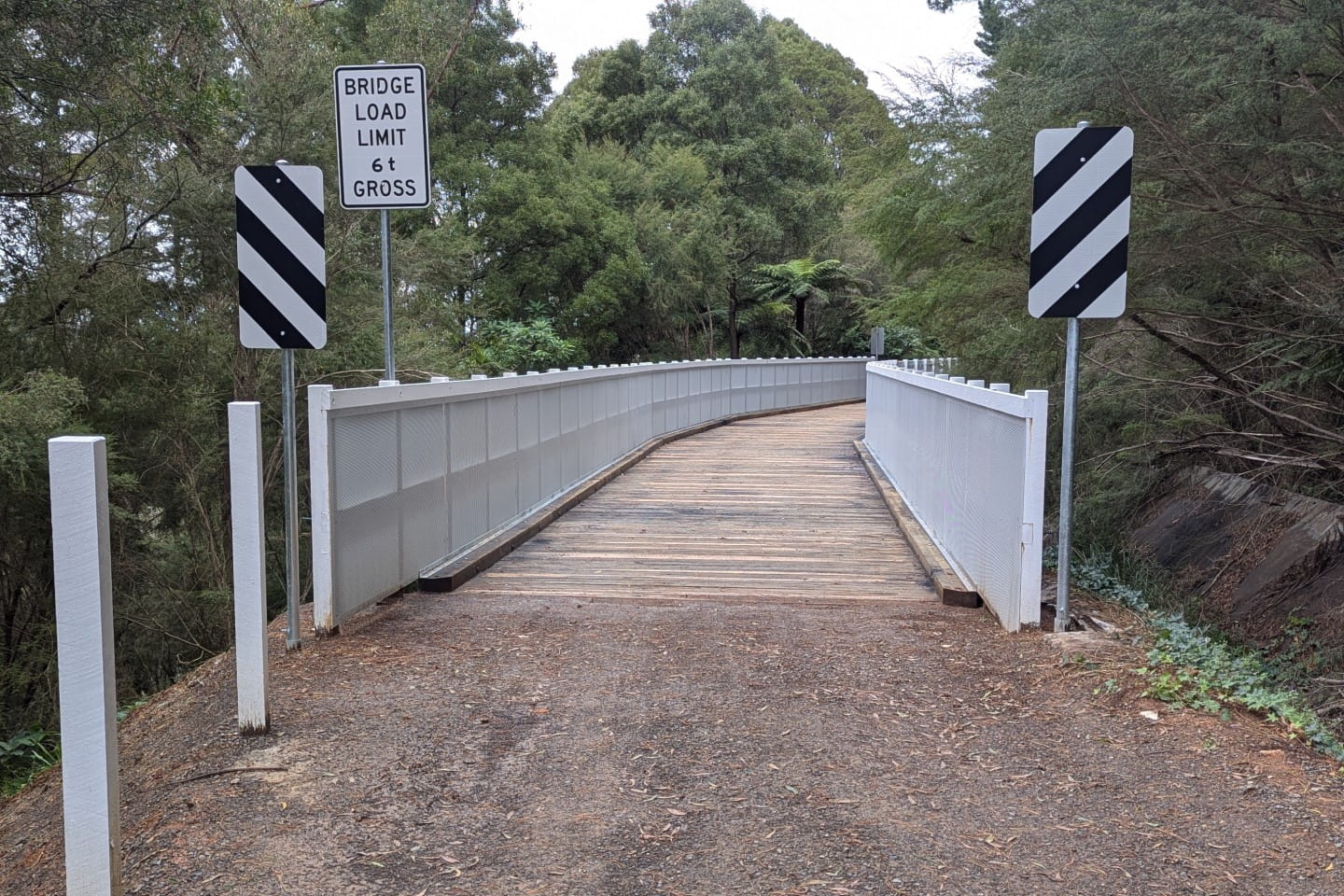
Photo: The bridge has now been made suitable for fire-fighting vehicles to use in case of emergency.
The strengthening of the bridge’s deck also means it can support fire-fighting vehicles up to 6 tonnes in weight.
Parks Victoria’s investment in the repairs shows our commitment to conserving heritage places and creating better opportunities for people to get out and enjoy them.
The project also ensures the O'Shannassy Aqueduct Trail remains one of Victoria’s premier cycling and walking destinations, connecting communities with nature and culture.
Related news

New and expanded parks to protect nature, cultural heritage and outdoor experiences
Several new and expanded parks and reserves across Victoria’s central west and Mirboo North are entering a new chapter, helping protect some of the state's most significant natural and cultural landscapes while ensuring people can continue to enjoy the outdoors for generations to come.

New access arrangements confirmed for Dyurrite
We have released the Dyurrite Access Changes Summary which outlines the new access arrangements that will take effect across the Mount Arapiles-Tooan State Park (Dyurrite Cultural Landscape) from October 2026.

Historic Walhalla landmarks restored for future generations
Two of Walhalla’s most distinctive heritage landmarks have been given a new lease on life, with recent repair works helping protect the town’s gold rush history and improve access for visitors exploring one of Gippsland’s most evocative historic places.